Best Buy stock leans on a consumer electronics cycle
Best Buy Co. Inc. trades on the Nasdaq as a U.S. retail reference for consumer electronics, appliances, and connected-home gear.
Glenn Harwood·updated July 04, 2026
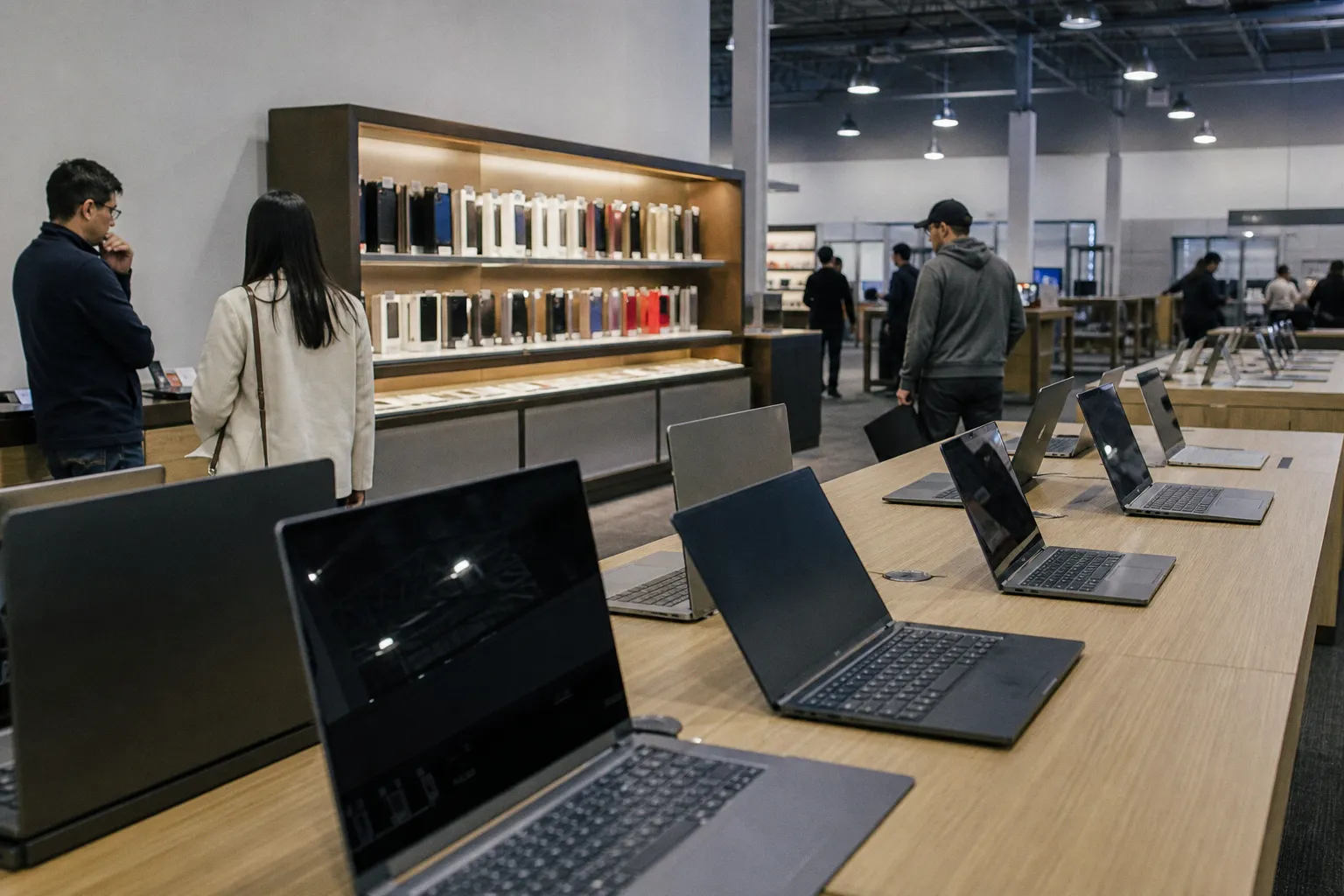
The stock moves with higher-ticket discretionary spending rather than product launches, positioning the chain as a practical readout for upgrade-cycle timing.
The catalog and what drives revenue
Best Buy's footprint covers consumer electronics, major appliances, computing, and smart-home categories. That breadth lets the chain absorb demand shifts across separate product cycles instead of leaning on one release window. Revenue concentrates in higher-ticket electronics and home appliances — categories where promotions, replacement cycles, and holiday timing move volume more than entry-level accessories. The chain is listed under ISIN US0865161014 and sits inside the Nasdaq consumer discourse regardless of any single-day catalyst. When discretionary tech spending contracts, larger-ticket items compress first, which tends to push promo activity deeper into the quarter.
What the cycle means for buyers
For a reader timing a TV, laptop, appliance, or smart-home refresh, the retail cycle sets the deal calendar. When spending cools, retailers with this product mix typically extend promo windows, clear older inventory, and front-load holiday discounting. When demand firms, discounts shorten and financing bundles compress. The smart-home and computing segments track their own refresh cadence independent of TV and appliance cycles, so a cooling signal in one category does not translate one-to-one across the store.
Component cost moves upstream — display panels, DRAM, NAND, SoCs — tend to hit shelf pricing before retail margin guidance adjusts. Holiday timing matters more here than in most retail formats because the chain books a disproportionate share of full-year revenue in the final quarter.
Cost-side pressure on the supply chain
The retail-cycle thesis runs against upstream signals worth monitoring. Coverage names Apple supplier Luxshare as pursuing a $3.1 billion Hong Kong share sale to diversify beyond consumer electronics, and flags Sony alongside two peer consumer electronics names as facing AI-related cost pressure. Separately, reports describe Xbox and Apple raising prices the same day as a "RAMageddon" affecting the segment.
Those are headlines rather than verified pricing data, but the direction is consistent: component inflation and AI capex are landing on consumer electronics vendors. Translated to the shelf, the pattern points to tighter promotional windows on current-generation gear and steeper clearance on prior-year stock once new cycles begin.
What to track
Watch quarterly comp reads and promotional depth as the primary signal for deal timing. Pair that with component-cost coverage — DRAM, NAND, panel pricing — to anticipate whether sticker prices hold or move. For buyers, the practical read is straightforward: larger-ticket purchases and accessory bundles see the deepest cuts when the retail cycle softens, and the narrowest windows when it firms. Bundled warranty add-ons and trade-in credits tend to be the first levers pulled when inventory needs clearing, and the first ones retracted when demand recovers.