ANC headphone features that ease sensory overstimulation
When a shopping mall, an open-plan office, or a subway car becomes intolerable, the cause is rarely the noise itself — it is the loss of control. Sensory overstimulation happens when the auditory system receives more input than the brain can filter.
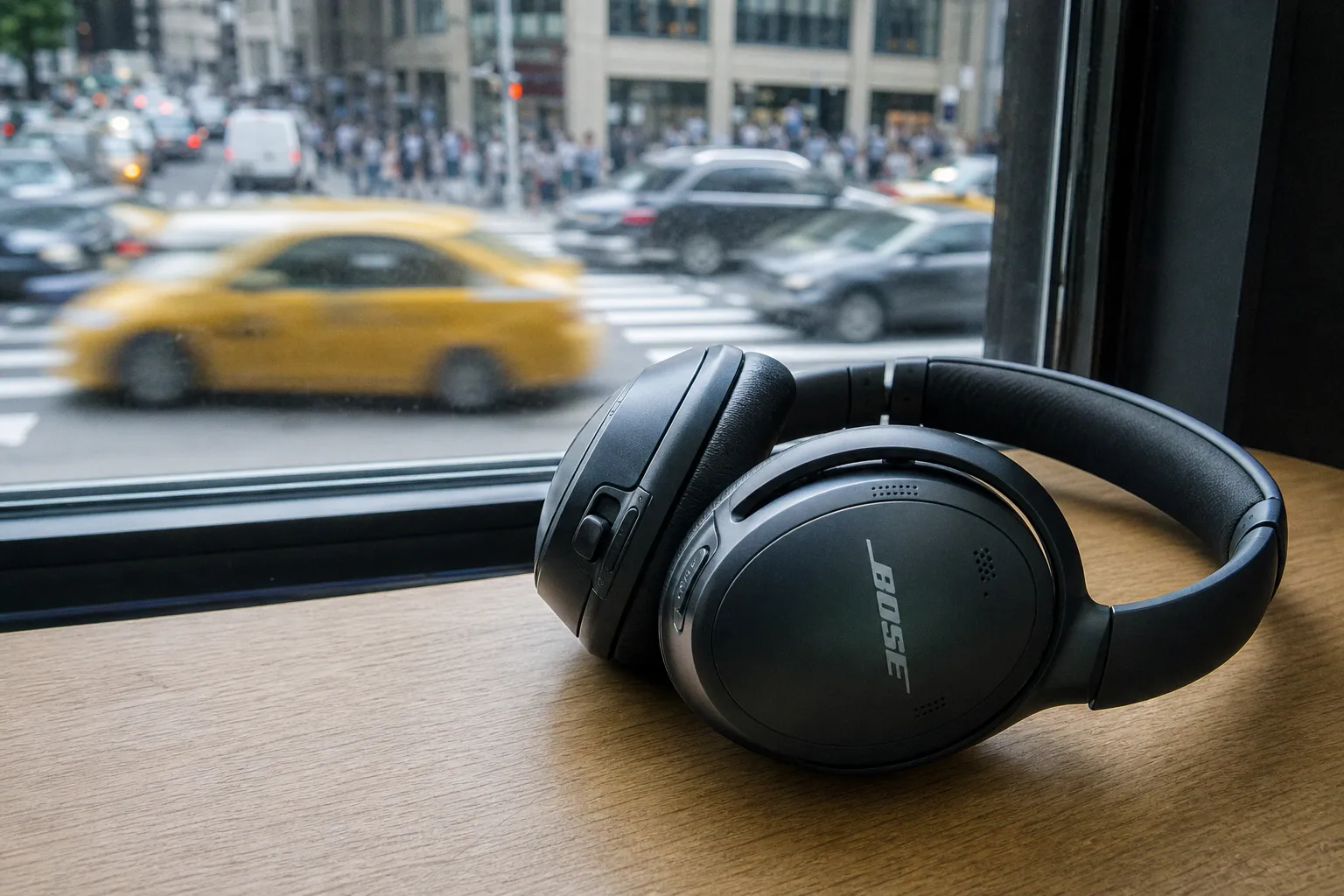
The Mechanics of Silence: Hybrid ANC vs. Passive Isolation
Active Noise Cancellation and passive isolation are two different mechanisms that operate on the same goal. Treating them as interchangeable is the first configuration error most users make.
Passive isolation is the physical seal created by the ear cup, the ear pad foam, and the tip geometry on in-ear models. This seal blocks sound waves mechanically before they reach the eardrum. A well-fitted set of closed-back headphones or properly inserted silicone tips can reduce ambient noise by 15 to 30 dB, depending on the seal and the source frequency. Passive isolation is most effective against mid- and high-frequency sounds — voices, keystrokes, glassware, door slams.
Active Noise Cancellation uses microphones to sample the environment, invert the waveform, and play the anti-phase signal through the drivers. The destructive interference reduces the pressure wave before the ear processes it. The hardware comes in three configurations:
- Feedforward ANC — microphones sit on the outside of the ear cup. They capture ambient noise before it reaches the driver. The system has a wider effective range on low frequencies but is more prone to wind noise and reduced accuracy in dynamic environments.
- Feedback ANC — microphones sit inside the ear cup, near the driver. They sample the residual noise after passive isolation. The system is more accurate but has a narrower frequency response and is vulnerable to feedback loops at high gain.
- Hybrid ANC — combines both microphone arrays. The external mics handle low-frequency environmental noise (aircraft cabin, HVAC rumble, traffic), while the internal mics correct the residual mid- and high-frequency leakage. Hybrid systems cancel a broader range of frequencies than feedforward-only designs.
For sensory overstimulation, hybrid ANC is the relevant configuration. The dual-microphone design addresses the low-frequency constant hum that drives cumulative auditory fatigue, while the internal array catches the residual mid-range noise that passive isolation alone cannot block.
Hybrid ANC is not a marketing tier. It is a specific hardware arrangement that expands the cancellation band into frequencies where single-array systems lose accuracy.
| Parameter | Passive Isolation | Feedforward ANC | Hybrid ANC |
|---|---|---|---|
| Mechanism | Physical seal | External mic + anti-phase | External + internal mics + anti-phase |
| Effective range | Mid/high frequencies | Low frequencies (20 Hz–1 kHz) | Low to mid frequencies |
| Wind noise handling | High (no mics exposed) | Low | Moderate |
| Best use case | Office chatter, voices, glassware | Airplane cabin, HVAC | Mixed daily environments |
| Reduction ceiling | 15–30 dB | Up to 20 dB low band | 30–40 dB in specific bands |
Why Frequency Matters: Understanding What ANC Can and Cannot Block
The most common misunderstanding about active noise cancellation is that it silences everything in the room. It does not. The reduction is frequency-dependent, and the limit is set by physics, not by price.
ANC operates in the low-frequency range, typically from 20 Hz to 1 kHz. This is where constant, droning sounds live: aircraft engines at 100–300 Hz, HVAC systems at 50–500 Hz, subway cars at 60–120 Hz, refrigerator compressors at 100–200 Hz. The waveform for these sounds is predictable and slow, which is what allows the anti-phase signal to cancel it.
High-frequency sounds — a baby crying at 2–4 kHz, a whistle at 3 kHz, clattering dishes at 4–8 kHz, a sudden shout — rise too fast for the microphone-to-driver latency to construct an accurate anti-phase wave. The system cannot predict the waveform in time. These sounds pass through the cancellation circuit largely unaltered.
This is where passive isolation takes over. A dense ear pad with a tight clamp, or in-ear tips with a deep seal, mechanically blocks the high-frequency transients. To reduce sensory overstimulation, you need both systems operating in series. ANC handles the sustained low-frequency load; the physical seal handles the spikes.
What to check if the setup fails:
- If a low-frequency hum is still audible, the hybrid system is not engaging. Verify the ANC mode is set to "On" or "Adaptive" in the companion app, not "Transparency."
- If voices and sharp noises still cut through, the passive seal is compromised. Adjust the headband extension, rotate the ear cups to flatten the pad against the jaw line, or try a larger tip size on in-ear models.
- If cancellation introduces a hiss, the internal microphone gain is likely set too high. Reduce the ANC intensity in the app, or switch to a less aggressive preset.
The Role of Transparency Modes in Preventing the Occlusion Effect
Active cancellation has a side effect that becomes problematic during a sensory overload episode. When you block external sound and then try to reintroduce it — for a conversation, an announcement, a crosswalk signal — the sudden switch can be jarring. The occlusion effect compounds this: the perception of your own voice and body sounds as hollow or boomy, caused by the sealed ear cup reflecting low-frequency vibrations back through the skull.
Transparency mode (also labeled Ambient, HearThrough, or Social mode depending on the manufacturer) is the feature that solves this. It uses the external microphones to pipe the environment directly into the drivers, bypassing the cancellation circuit. For a sensory-sensitive user, transparency mode is not a convenience feature. It is a safety control.
You will need to configure transparency mode before the overstimulation event, not during it. The configuration sequence is as follows:
1. Open the companion app and locate the ANC/transparency toggle. Most modern headphones map this to a physical button or a long-press gesture on the ear cup.
2. Set a default transparency level between 60 and 80 percent. Full transparency at 100% reintroduces the full environmental volume, which can re-trigger overload. Partial transparency lets the user hear announcements and conversation without the full acoustic load.
3. If the app supports it, assign a custom ANC profile that lowers the cancellation strength during transparency transitions. A 200–500 ms ramp prevents the sudden pressure change.
4. Test the configuration in a controlled environment — a quiet room with one background radio — before relying on it in public.
Transparency mode is the off-ramp. Without it, the user is locked inside the cancellation, and the only way out is to remove the headset — which is rarely possible mid-meeting or mid-commute.
Managing ANC Pressure and Eardrum Suck for Sensitive Users
A subset of users experiences a pressure sensation or "eardrum suck" when ANC is active. The effect is similar to the change in pressure during an airplane descent: a feeling of fullness in the ear canal, sometimes accompanied by mild dizziness. The cause is the active anti-phase signal creating a low-pressure zone near the eardrum. The brain interprets the pressure differential as a change in altitude.
For users with sensory sensitivities, this sensation can be more than discomfort — it can be a trigger. The fix is not to abandon ANC, but to reduce its intensity. The configuration path depends on the hardware tier:
- Flagship models typically offer adjustable ANC levels in the companion app. Set the level to the lowest setting that still reduces the target low-frequency noise. For some users, 40–60% cancellation is sufficient.
- Mid-range models often offer only on/off ANC. In this case, the workaround is to switch to passive isolation only — turn ANC off, rely on the ear cup seal, and use a low-volume audio track to mask residual noise.
- In-ear models with hybrid ANC can be reconfigured by switching to a smaller tip. A looser fit reduces the pressure differential at the cost of passive isolation. This is a tradeoff, and the right balance depends on the environment.
What to check if pressure persists:
- If the sensation continues at the lowest ANC setting, the driver is likely oversized for the ear canal geometry. Switch to in-ear models with a smaller driver, or to on-ear headphones that do not seal the canal.
- If the pressure builds up over a long session, schedule a 5-minute break every 60–90 minutes. Remove the headset and allow the ear canal to equalize.
- If the sensation is accompanied by pain or ringing, stop using the device and consult an audiologist. ANC is not a medical device, but persistent ear pain is a clinical signal.
Ergonomics and Clamping Force: The Importance of Physical Fit
The most sophisticated ANC circuit on the market cannot compensate for a poor physical fit. Clamping force — the pressure the headband applies to hold the ear cups against the jaw — directly determines both passive isolation and long-term comfort. A clamp that is too loose leaks low-frequency sound past the pad, forcing the ANC system to work harder and introducing the pressure sensation at higher gain. A clamp that is too tight causes jaw fatigue and headaches within 30–60 minutes.
The target clamp is firm enough to maintain a seal when the head is turned, but light enough to wear for 2–3 hours without pressure points. Most flagship over-ear models ship with a clamp in the 3–4 Newton range, which is the empirical zone for a sustainable seal. Clamping force is not published in most spec sheets, so physical testing is required.
The selection sequence:
1. Put the headphones on with ANC off. Play a low-frequency test tone (a 100 Hz sine wave) at moderate volume. Walk around the room. If the tone fades when you turn your head, the clamp is too loose.
2. Wear the headphones for 15 minutes with no audio playing. If the headband pressure point becomes noticeable before the timer ends, the clamp is too tight.
3. Check the ear pad material. Memory foam with a leather or protein-skin cover provides a better seal than fabric-covered pads, but fabric is cooler for extended wear in warm environments. For sensory-sensitive users, smooth protein-skin covers tend to feel less abrasive against the skin.
What to check if the fit fails:
- If the seal breaks when you wear glasses, the temple arms are creating a gap in the pad. Switch to thinner temple arms, or use headphones with a deeper ear cup that accommodates the frame.
- If the ear cups feel hot after 20 minutes, the pad material is not breathable. Switch to a velour or fabric replacement pad.
- If the headband creates a pressure point at the crown of the head, extend the headband by one notch and recheck. The weight should be distributed across the full crown, not the apex.
Long-Term Maintenance: Keeping the Acoustic Seal Consistent
Headphone performance degrades with use. The ear pads compress, the headband loosens, and the microphone arrays accumulate debris. For a sensory-sensitive user, this degradation translates into reduced cancellation, increased pressure sensation, and the slow return of the very triggers the device was purchased to block.
Maintenance schedule:
- Weekly: Wipe the ear pads with a dry microfiber cloth. Moisture and skin oil break down the protein-skin cover and reduce the seal.
- Monthly: Remove the ear pads (if detachable) and inspect the foam for compression set. If the foam no longer springs back when pressed, replace the pads. Most manufacturers sell replacements for $20–$50.
- Quarterly: Clean the microphone ports with a soft-bristled brush. Blocked ports reduce ANC accuracy and introduce hiss.
- Annually: Update the firmware. ANC tuning is software-defined, and manufacturers release updates that refine the cancellation curve, fix latency bugs, and add new transparency presets.
If the headphones are used daily for 3+ hours, plan on replacing the ear pads every 12–18 months. The pad is a consumable component, not a permanent part. Treating it as such keeps the acoustic performance consistent across the lifespan of the device.
Closing Position
Active noise cancellation is a tool, not a treatment. For users managing sensory overstimulation, the value of the technology is not in the decibel rating printed on the box — it is in the configuration control it provides. Hybrid ANC handles the low-frequency constant load. Passive isolation blocks the high-frequency spikes. Transparency mode provides a controlled off-ramp. Adjustable ANC intensity prevents the pressure sensation. Proper clamping force maintains the seal without triggering jaw fatigue. Each of these features is a configuration step you control, not a fixed property of the hardware. Configure them deliberately, test them in the environments you actually live in, and replace the consumable parts on schedule. That is the path to consistent, predictable acoustic relief.