Compare Smart Thermostat Idle Drain to Cut Heating Costs
Your smart thermostat draws between 1 and 3 watts sitting idle on the wall. That's the electrical equivalent of a nightlight.
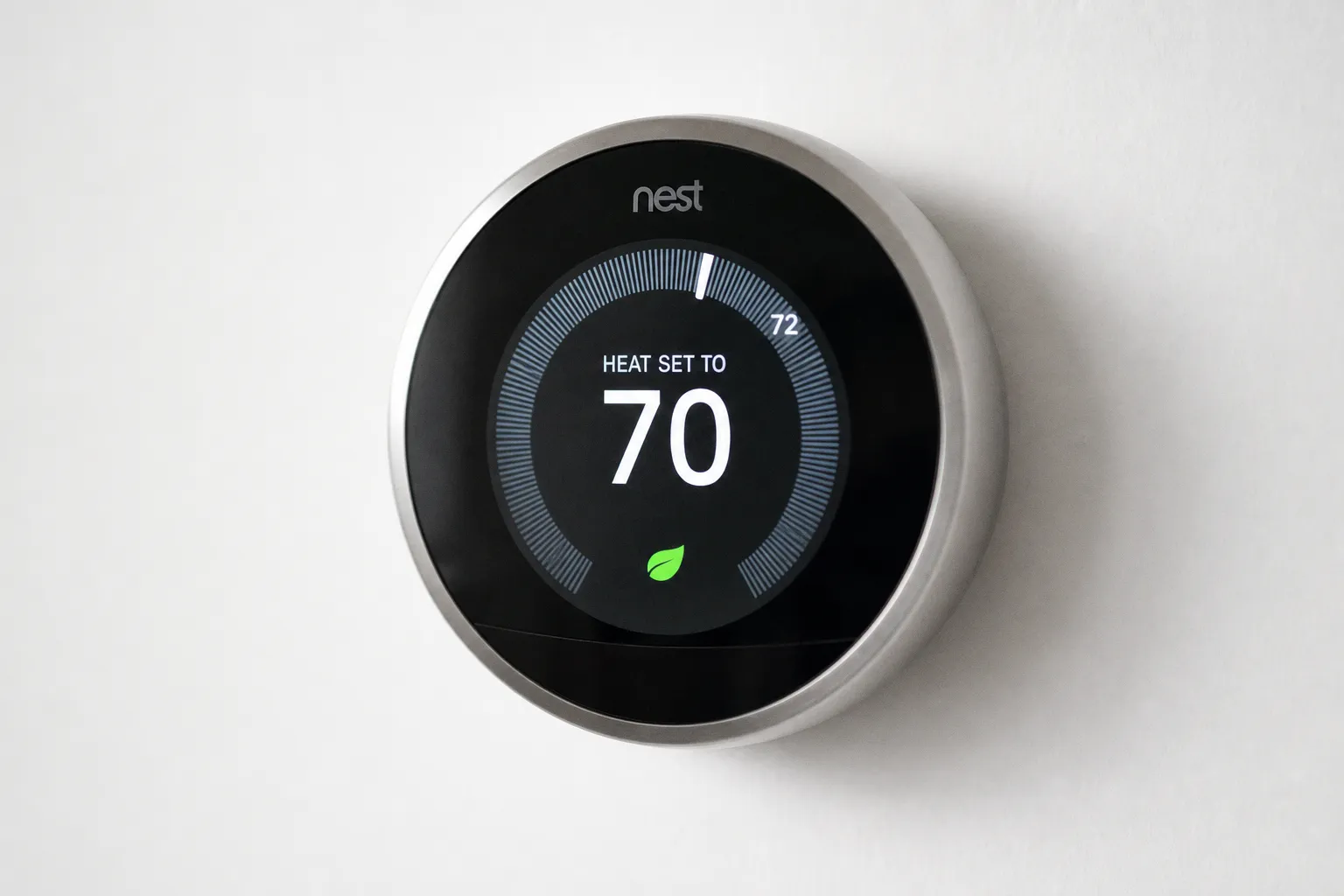
Smart Thermostat Power Consumption: Debunking the Idle Drain Myth
Yet somehow, forums and comment sections are flooded with homeowners convinced this tiny parasitic load is the silent assassin behind their $200 winter electric bills. It isn't. And if you're spending mental energy auditing standby draw instead of optimizing actual HVAC runtime, you're auditing the wrong line item.
The real cost of heating and cooling your home isn't hiding in a 2-watt trickle. It lives in the thousands of watts your furnace or central air system burns every time it cycles on. The smart thermostat's value proposition was never about consuming less power itself — it was about making the equipment it controls consume less. That distinction matters. Let's break down the actual numbers, the real levers, and where your optimization budget should actually go.
The 1–3 Watt Reality: Auditing the Wrong Ledger
Start with the raw consumption. Most smart thermostats — ecobee, Google Nest, Honeywell Home — idle between 1 and 3 watts. At the high end, that's roughly 26 kilowatt-hours per year if the device never sleeps, never enters low-power mode, and runs full-brightness display 24/7. At the U.S. national average electricity rate of roughly 16 cents per kWh, you're looking at an annual standby cost of about $4.16. Call it a $4 line item.
Now compare that to the HVAC system it controls. A typical central air conditioner draws 3,000 to 5,000 watts per hour of active operation. A gas furnace blower motor pulls 400 to 800 watts per cycle. One hour of cooling costs you more than an entire month of thermostat idle drain. This is the cost-per-year math that matters, and the ratio isn't even close — we're talking a 1,000:1 spread between what the thermostat consumes and what it manages.
You don't save money by unplugging the smoke detector. You save money by not setting the house on fire. The thermostat operates on the same principle.
Manufacturers aren't hiding this data. It's in every spec sheet. But the marketing language around "energy-saving smart home devices" creates an expectation gap. Consumers hear "smart" and "energy efficient" in the same sentence and mentally assign the device itself the heavy lifting. The device is a control interface. The savings live in the schedule it executes and the sensors it reads — not in its own power draw.
The C-Wire Tax: What Continuous Power Actually Costs
Here's where the conversation gets operationally interesting. Most smart thermostats require a C-wire — a common wire providing continuous 24V power from the HVAC transformer. Without it, the device has to siphon power through the heating or cooling circuits themselves, a hack called "power stealing" that can cause battery drain, display flickering, and erratic cycling. If your home was built before 2010, there's a decent chance you don't have one.
The C-wire installation cost is the actual hidden expense nobody budgets for. A licensed HVAC technician will charge between $75 and $200 to run one, depending on wire routing and wall access. Some homes need a whole new transformer. At that price point, your first-year cost of ownership for a "smart" thermostat just climbed by 30–50% of the device MSRP.
Before you buy, check your existing wiring:
1. Pull your current thermostat off the wall plate — gently, most snap off.
2. Look at the labeled wires. You're looking for a wire on the terminal marked "C" or "B." If it's empty, you need one.
3. If you have five or more wires already running to the thermostat, you likely have a spare conductor that can be repurposed as a C-wire at the control board.
4. If you have only four wires (R, W, Y, G), budget for a professional installation or look for models that ship with a C-wire adapter kit — ecobee includes one in the box; Nest does not.
This is a procurement detail, not a dealbreaker. But it's a cost line that inflates the real sticker price of the device by $75–$200 if you're not prepared for it. Factor it into your total cost of ownership before you hit checkout.
| Cost Component | ecobee Premium | Google Nest Learning | Honeywell T9 |
|---|---|---|---|
| Street price (typical) | $220–$250 | $200–$250 | $170–$200 |
| C-wire adapter included | Yes | No | No |
| Est. C-wire install (if needed) | $0 | $75–$200 | $75–$200 |
| Idle power draw | ~2W | ~1–3W | ~2W |
| Annual idle cost (at $0.16/kWh) | ~$2.80 | ~$1.40–$4.16 | ~$2.80 |
| First-year real cost range | $220–$250 | $275–$450 | $245–$400 |
That first-year real cost range is the number you should be shopping against — not the MSRP on the box. Retailers love to show you the sticker price. They don't love showing you the installed cost.
Where the Actual Savings Live: Scheduling and Geofencing
ENERGY STAR and the Department of Energy converge on one figure: smart thermostats save the average household 8% to 12% on annual heating and cooling costs. For a home spending $1,200 a year on HVAC, that's $96 to $144 back. Not a fortune, but a legitimate return — if you use the features.
The savings mechanism isn't mystery physics. It's three behavioral interventions automated by hardware:
Adaptive scheduling. A programmable thermostat with a dead schedule saves nothing. A smart thermostat that learns your departure time, adjusts 15 minutes before you leave, and pre-heats before you return eliminates the dead runtime that standard schedules miss. The incremental gain is in the margins — 20 minutes of avoided runtime per day adds up to roughly 120 hours per heating season.
Geofencing. This is the underrated feature. When your phone leaves a defined radius around your home, the thermostat shifts to "away" mode automatically. No manual override, no forgotten adjustment. For households with irregular schedules — shift workers, freelancers, parents with unpredictable pickup times — geofencing closes the efficiency gap that fixed schedules can't.
Occupancy sensors. Room-level or home-level occupancy detection lets the thermostat confirm whether the house is actually empty before it commits to an away setback. ecobee's room sensors are the gold standard here. Nest uses its onboard motion sensor, which is less granular but still functional.
The 8–12% savings figure assumes you actually use the smart features. A smart thermostat running a manual hold at 72°F is just an expensive dumb thermostat with Wi-Fi.
The ROI math works out to roughly $8–$12 per month in savings, which means a $220 thermostat pays for itself in about 18–24 months. That's a reasonable depreciation curve for a home appliance. Not spectacular, not a scam. Just honest utility arbitrage.
HVAC Efficiency: The Real Bill You Should Be Auditing
If you're serious about cutting heating costs, the thermostat is line item number three or four on the priority list. Here's the actual hierarchy of impact, ranked by dollar value per optimization dollar spent:
1. Home insulation and air sealing. A poorly insulated attic bleeds conditioned air 24 hours a day, 365 days a year. Adding blown-in insulation to an under-insulated attic costs $1,500–$3,000 and typically saves 15–25% on heating and cooling annually. Payback period: 2–4 years. No app required.
2. HVAC equipment efficiency. If your furnace is rated at 80% AFUE and you replace it with a 96% AFUE model, you're cutting fuel consumption by roughly 16% on day one. The capital cost is high ($4,000–$8,000 installed), but the annual savings of $200–$400 make it a 15–20 year asset with real return.
3. Duct sealing. The Department of Energy estimates 20–30% of air moving through ductwork is lost to leaks in typical homes. Sealing runs $400–$1,500 depending on access. Savings: 10–15% of HVAC costs.
4. Smart thermostat optimization. 8–12% savings, $200–$400 installed. We've covered this.
5. Thermostat idle drain reduction. $4 per year. Not worth discussing.
That's the audit trail. If you're agonizing over 2 watts of standby draw while your attic has R-19 insulation and your ductwork sounds like a wind tunnel, you're optimizing noise, not signal.
Strategic Settings: Maximizing Your Smart Home Energy ROI
Assuming you've already handled (or budgeted for) the insulation and equipment tiers above, here's how to extract maximum value from the thermostat itself:
Set aggressive but realistic setbacks. A 7–10°F setback during away hours is the sweet spot. Deeper setbacks can trigger longer recovery cycles that erode savings. Don't set the house to 55°F and expect the system to recover efficiently in 30 minutes — it won't.
Enable geofencing immediately. Don't wait to "set it up later." The feature works out of the box on most models. Pair it with your household members' phones so the system knows when the last person leaves.
Use room sensors for zone targeting. If you have ecobee room sensors, place them in the rooms you actually occupy — bedroom, living room, home office. Let the thermostat prioritize comfort where it matters and relax climate control in unused spaces.
Review energy reports monthly. Both ecobee and Nest provide runtime data. If your system is running more than 10 hours per day during mild weather, something else is wrong — undersized equipment, duct leakage, or a thermostat placed in a drafty hallway that's fooling the sensor.
Don't buy a second thermostat for a zone you barely use. The incremental savings from a dedicated smart thermostat in a guest bedroom or basement that's already set to a permanent setback is near zero. Save the $200.
The Buy Window: When to Pull the Trigger
Smart thermostats follow a predictable discount cycle. The historical floor pricing hits during three windows: Black Friday through Cyber Monday, Amazon Prime Day (July), and the end-of-model-year clearance when manufacturers refresh product lines (typically late Q3).
Outside those windows, expect to pay within 10–15% of MSRP. Retailers like to run "spring savings events" and "back to school" promotions that knock $15–$25 off — those are noise discounts, not real ones. The substantive markdowns are 25–35% off MSRP, and they cluster around the dates above.
If you're buying now and it's not one of those windows, wait. A $230 thermostat purchased in April will be $160–$175 by July. That $55 delta covers a professional C-wire installation.
If you're buying during a legitimate sale window, the ecobee Premium at anything under $180 is a strong entry. The Nest Learning Thermostat at under $170 clears the value bar. Anything above those floors — and you're paying retail with a sticker that says "sale."
A 30% discount off an inflated MSRP isn't a deal. It's the manufacturer's planned selling price with extra steps.
Price transparency is the consumer's best weapon, and most retailers are banking on you not having it. Track historical pricing across major platforms over several weeks before purchasing. The listed "sale price" is frequently a manufactured markdown from an artificially raised MSRP rather than a genuine deal.
The bottom line: your smart thermostat's idle drain is a rounding error. The real money is in the 8–12% HVAC savings that scheduling, geofencing, and occupancy sensing deliver — provided you actually configure them. Stop auditing the thermostat's wattage. Start auditing its runtime impact on the equipment that actually costs you money.