Robot vacuum reviews Australia: why suction power is rising
The premium end of the Australian robot-vacuum market has turned suction into an arms race. Not long ago, 10,000Pa was close to the ceiling.
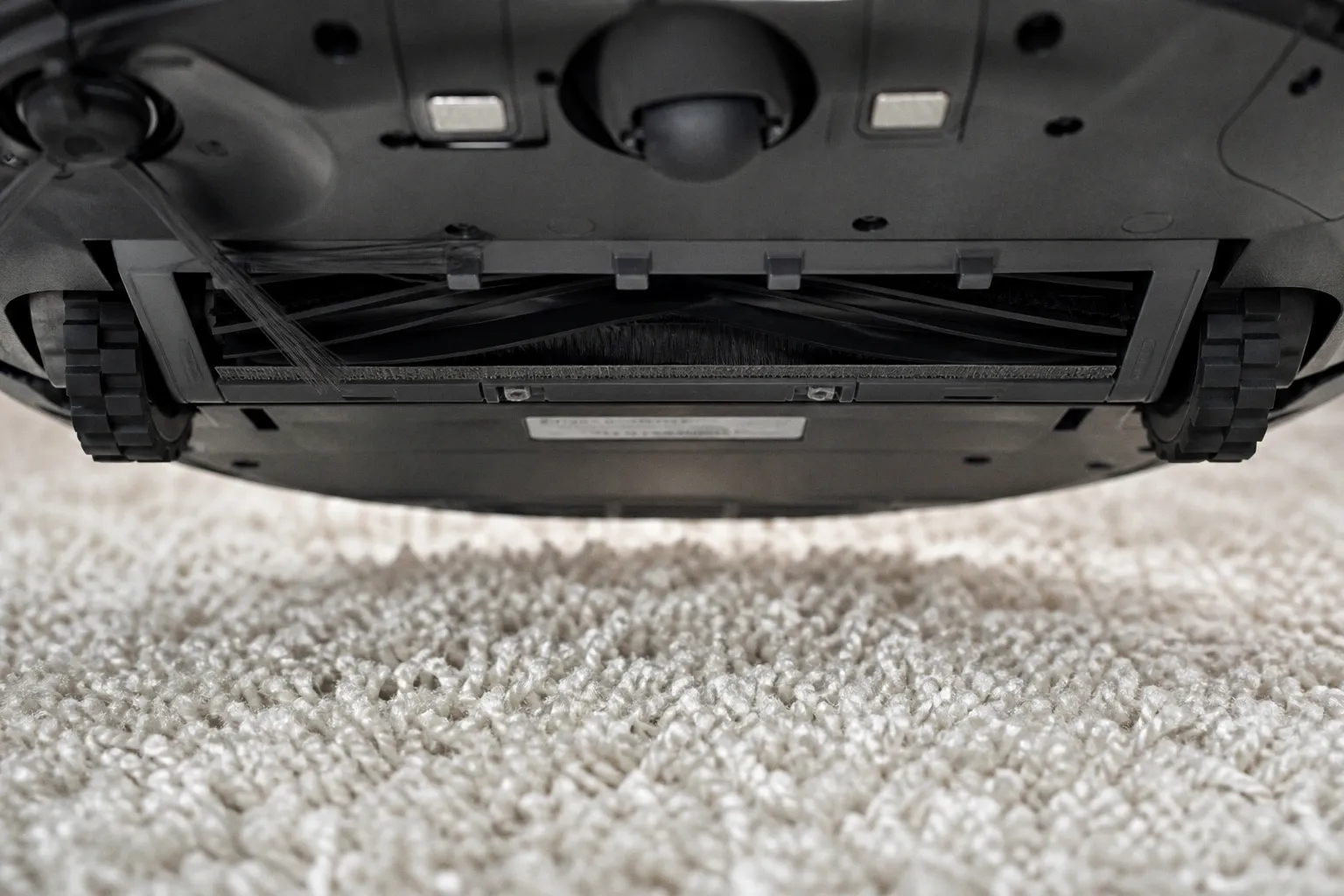
Now the labels are louder: 20,000Pa on the Dreame X50 Ultra, 22,000Pa on the Roborock Saros 10, and 30,000Pa plus 16L/s airflow on ECOVACS’ DEEBOT T90 OMNI.
That is a sharp spec escalation. It is not a clean performance ranking.
In robot vacuum reviews Australia shoppers are increasingly handed a single giant number, then expected to treat it like a horsepower figure. That suits the brands. A high Pa claim looks decisive on a product tile. It gives retailers a neat sorting tool. It also hides the parts of cleaning that are harder to compress into a badge: airflow, brush contact, carpet sealing, route planning, edge work, bin management, and the app that decides whether the machine cleans your home or repeatedly negotiates with a chair leg.
The suction number is rising because it sells. Whether it earns the premium is a separate audit.
The great suction inflation: from 10,000Pa to 30,000Pa
The market moved fast. TechRadar’s Australian buying guidance noted that the upper end of the category was around 10,000Pa at the start of 2025. Its newer framing puts mid-range machines broadly in the 6,000Pa to 9,000Pa band, with premium models now pushing beyond 18,000Pa. Budget models generally remain below 6,000Pa.
That creates a familiar retail ladder.
A 4,300Pa model such as the ECOVACS DEEBOT N10 can be positioned as entry-level. A 6,000Pa to 9,000Pa machine becomes the sensible middle shelf. Then the flagship arrives with a five-digit rating and a premium dock, premium app features, premium obstacle avoidance, premium everything.
The risk is obvious. The manufacturer has created an artificial hierarchy around one test condition that consumers cannot reproduce in their living rooms.
| Claimed suction band | What it signals at retail | What it does not prove |
|---|---|---|
| Below 6,000Pa | Budget or older platform | That it cannot maintain hard floors well |
| 6,000–9,000Pa | Current mid-range expectation | That every model in the range cleans equally |
| Around 10,000Pa | Former flagship territory | That a newer 20,000Pa model collects twice as much debris |
| 20,000–22,000Pa | Modern premium positioning | Superior carpet, edge, hair, or mopping results |
| 30,000Pa | Maximum-spec flagship marketing | A universal best-in-class cleaning result |
The table is the point. These are positioning bands, not independent cleaning scores.
A robot can claim 30,000Pa at a narrow inlet, in a maximum mode, under a lab setup designed to generate the most impressive pressure differential. That same robot still has to pull crumbs from a grout line, lift hair from a low-pile rug, avoid a charging cable, reach the perimeter, and return to its dock without creating another task for you.
A Pa claim is a pressure headline. Floor cleaning is the full balance sheet.
The numbers themselves are not necessarily fake. That is not the accusation. The problem is comparability. There is no established universal standard in the available research forcing every robot-vacuum brand to measure, configure, and advertise Pascal ratings under identical conditions. One company’s maximum mode is not automatically another company’s maximum mode. One inlet geometry is not another’s. Neither is the brush system.
So when a 30,000Pa sticker faces a 10,000Pa sticker, the correct reading is not “three times the cleaning.” The correct reading is: more investigation required.
Pascals measure pressure, not the cleaning result
A Pascal is a unit of pressure difference. That is useful engineering data. It is not a full cleaning metric.
The distinction matters because suction pressure can rise when airflow is restricted. Dyson has made the point in its own explanation of vacuum metrics: a smaller inlet can produce a higher Pa reading without necessarily improving debris pickup. Restrict the opening enough and the pressure figure looks impressive. The air movement needed to carry dirt into the bin may not improve in step. Blockage risk may increase instead.
This is why Air Watts are often more informative in conventional vacuum discussions. Air Watts combine pressure and airflow. They are still not a complete verdict, but they make it harder to sell pressure in isolation. Dyson, for example, cites 65AW for its 360 Vis Nav robot vacuum rather than using a giant Pa number as the whole story.
There is no reliable universal conversion from Pa to Air Watts. There is also no honest equation that turns a robot’s claimed suction into a carpet-pickup percentage. Any listing that makes the leap without showing its test method is marketing, not measurement.
A practical robot vacuum performance comparison in Australia has to account for at least six moving parts:
- Airflow and inlet design. Pressure at the motor means little if airflow through the intake path is poor or easily choked by debris.
- Main brush design. Rubber rollers, bristle combinations, roller width, and bristle stiffness change how a robot agitates dust and pulls debris toward the intake.
- Floor contact. On carpet, the robot needs an effective seal and sufficient agitation. On hard floor, it needs to avoid scattering debris before collection.
- Side-brush and edge behaviour. A high-suction robot that leaves a dusty strip around skirting boards has not delivered a premium result.
- Navigation and repeatability. A machine cannot clean an area it misses, avoids unnecessarily, or abandons because its map has become unreliable.
- Bin and dock management. A robot operating with a packed bin, tangled roller, or clogged auto-empty path is not delivering its brochure performance.
This is also where the “best robot vacuums Australia 2025” style of ranking becomes slippery. A machine can be exceptional in a clean, open apartment with hard floors and still be a poor fit for a pet-heavy home with rugs, thresholds, loose cords, and dining chairs. The specification sheet does not know your floor plan.
Maximum mode is not the mode you will live with
Peak suction is usually a peak claim. The word “maximum” does a lot of work.
Dreame’s Australian X50 Ultra listing says its TurboForce suction reaches up to 20,000Pa. It also says that figure comes from in-house laboratory testing and that actual performance can vary with use. That disclosure is more useful than the headline because it identifies the boundary: this is a controlled maximum, not a guaranteed household outcome.
Roborock lists 22,000Pa HyperForce for the Saros 10. ECOVACS lists 30,000Pa and 16L/s airflow for the DEEBOT T90 OMNI’s BLAST Cleaning System. Those figures tell buyers that the flagship hardware is being engineered for higher output. They do not settle which machine removes more sand from a particular carpet, handles hair better over six months, or spends less time trapped under a sofa.
Maximum modes also have operating costs. Not always direct dollar costs that show up on the first receipt, but costs all the same:
1. Battery runtime contracts. More power draw can mean shorter cleaning passes, more charging interruptions, and less useful coverage before the robot needs a reset at the dock.
2. Noise rises. A robot running at its top setting may be less compatible with daytime calls, sleeping children, or a compact apartment.
3. The efficiency claim gets diluted. A robot that needs repeated turbo passes to manage ordinary debris is not necessarily a stronger cleaner than one that works methodically at a lower setting.
4. Wear does not disappear. Brushes, filters, bags, mop pads, and batteries are consumables. A premium robot is not exempt from depreciation because its dock looks expensive.
5. Automation can mask underperformance. A machine may run more often, make more passes, and still leave the owner believing the higher Pa number solved the problem.
This is where the cost-per-year view is more useful than MSRP theatre. Do not judge a robot vacuum as a one-day purchase. Judge it as a three-part ownership cost:
Purchase price + consumables + the value of your intervention over the years you expect to keep it.
The first component gets the advertising budget. The last two decide whether a premium model was actually good value.
A cheaper robot that needs daily rescue, weekly roller surgery, and manual vacuuming after every carpet run depreciates badly. A pricier model that maps reliably, handles routine debris, empties itself cleanly, and avoids most household clutter can justify a higher entry price. Not because it claims a larger number. Because it reduces labour over time.
The cheapest robot is not the lowest ticket price. It is the one that stops billing you in maintenance minutes.
What independent testing looks for instead
CHOICE’s Australian robot-vacuum testing method offers a more sober framework than the product-card arms race. Its overall score does not treat suction as the whole product. Ease of use carries the largest weighting at 30%. Hard-floor pickup accounts for 20%. Carpet pickup and mopping each carry 15%. Edge cleaning and pet-hair removal each account for 10%.
That weighting is revealing. It reflects how these machines fail in real homes.
A robot that has strong theoretical suction but bad software can be frustrating every day. A robot with excellent hard-floor pickup but weak edge performance can leave visible evidence along walls. A model that mops but requires constant pad maintenance may be selling an automated promise with a manual invoice attached.
CHOICE’s tests are specific. For hard floors, a robot runs for 25 minutes or until it completes its cycle. Carpet performance is measured by weighing the sand collected. Pet-hair removal is assessed after six minutes. Its methodology also covers corner and edge cleaning, object avoidance, mopping, and ease of use.
That does not mean every buyer must chase a single lab score. Homes differ too much for that. It does mean the right review process is multi-factor. A 30,000Pa claim should be one line in the evidence file, not the verdict stamped on the cover.
When reading top rated robot vacuums Australia roundups, separate three different statements that are often blurred together:
| Statement | What it actually means |
|---|---|
| “This robot has 20,000Pa.” | The manufacturer reports a maximum pressure figure. |
| “This robot picked up more debris in a test.” | A reviewer measured a result under stated test conditions. |
| “This robot is better for your home.” | A fit judgement based on floors, pets, clutter, expectations, and budget. |
Retail copy often jumps from the first statement to the third. Do not let it.
Brushes, navigation and the boring details that decide the result
Suction sells because it is simple. The real buying decision is not.
Start with floors. Hard floor is forgiving. Fine dust, cereal fragments, tracked grit, and light pet hair are within reach of many current robots, including machines well below flagship output. A 4,300Pa robot may not win a premium comparison, but it can still maintain a low-clutter hard-floor home effectively if its brush and navigation are competent.
Carpet is less forgiving. Embedded grit needs agitation. Hair needs to be lifted rather than merely pushed around. A higher-power setting can help, but so can a better roller, more controlled carpet detection, and a robot that makes full, consistent passes rather than wandering through the room with its boost mode engaged.
Then there are edges. The central suction inlet cannot clean where the machine body cannot reach. Side brushes matter. Their reach, speed, and tendency to fling debris back into the room matter. So does the robot’s wall-following behaviour. This is why edge cleaning remains a distinct test category rather than a footnote.
Navigation is even more expensive to get wrong. Poor object avoidance turns cables, socks, pet bowls, and chair bases into exclusions. Poor mapping creates missed rooms and duplicate runs. Aggressive avoidance can be almost as bad as reckless avoidance: the robot stays safe but leaves too much floor untouched.
The dock matters too, particularly in the premium segment. Auto-emptying, mop washing, mop drying, water handling, and detergent systems can reduce routine work. They can also add proprietary consumables, more parts to clean, and more expensive failure points. The retail pitch is “hands-free.” The ownership reality is “hands-lighter,” if the system is well executed.
That is the line buyers should hold.
A robot vacuum is a maintenance appliance. It is not a guaranteed replacement for a full-size vacuum or a manual mop. It can materially reduce the frequency of those jobs. It cannot repeal the physics of thick carpet, tangled hair, wet spills, sticky kitchen residue, or neglected filters.
How to read the next suction claim without paying the flagship tax
The next time a brand launches a robot with another five-digit Pa figure, use a stricter filter.
First, place the number in its market band. If it sits above 18,000Pa, it is premium-spec territory. That tells you the company is competing at the high end. It does not establish a performance margin over a competent 8,000Pa or 10,000Pa rival.
Second, look for airflow data, but do not treat that as a magic replacement metric. ECOVACS’ 16L/s figure alongside the T90 OMNI’s 30,000Pa claim is more informative than pressure alone. It still needs independent testing. The full system remains relevant.
Third, inspect the cleaning hardware and the software. Does the main roller suit hair? Does the model lift or manage mop pads around carpet? Does it have a credible edge-cleaning mechanism? Does its app allow room-by-room control, multiple maps, no-go zones, and sensible scheduling without burying core functions behind a dozen menus?
Fourth, price the ownership period, not the launch moment. MSRP is often the least useful number in robot vacuums. This category discounts heavily, refreshes frequently, and depreciates quickly after a successor arrives. A flagship bought near its price floor can make sense. The same unit bought at artificial markup because its Pa figure is new and shiny is a poor allocation of money.
Finally, distinguish between a genuine capability gap and a spec-sheet gap. If your home has mostly hard floors, minimal pet hair, and a simple layout, a mid-range robot with reliable mapping may produce nearly all the value of a premium model. If you have rugs, shedding pets, frequent debris, complex furniture, and a realistic need for a self-maintaining dock, the premium tier may earn its cost. But the case must rest on the whole machine.
Not the loudest number printed on the carton.
The market will keep inflating the number
Robot vacuum suction power trends are heading in one direction: up. Brands have found a metric that is easy to headline, easy to compare at a glance, and difficult for buyers to verify. Expect more claims above 20,000Pa. Expect more branded names for motor systems. Expect the old flagship number to become the new middle-tier reference point.
That does not make the engineering meaningless. Higher available output can help. Better airflow can help. Better carpet boost can help. In a well-designed robot, these gains can be real.
But the number is only valuable when the rest of the system can convert it into collected dirt, reliable coverage, and less work for you.
Buy on a verified price floor after independent testing confirms the basics: hard-floor pickup, carpet behaviour, edge results, navigation, dock reliability, and app control. If the model is still selling mainly on a new Pa record, wait. Let the first discount cycle expose its real market value.