Premium noise cancelling headphones: why prices are rising
The old premium ceiling for noise cancelling headphones has turned into the new entry ticket. Sony’s WH-1000XM6 arrived in May 2025 at $449.99. That is $50 above the WH-1000XM5 launch price.
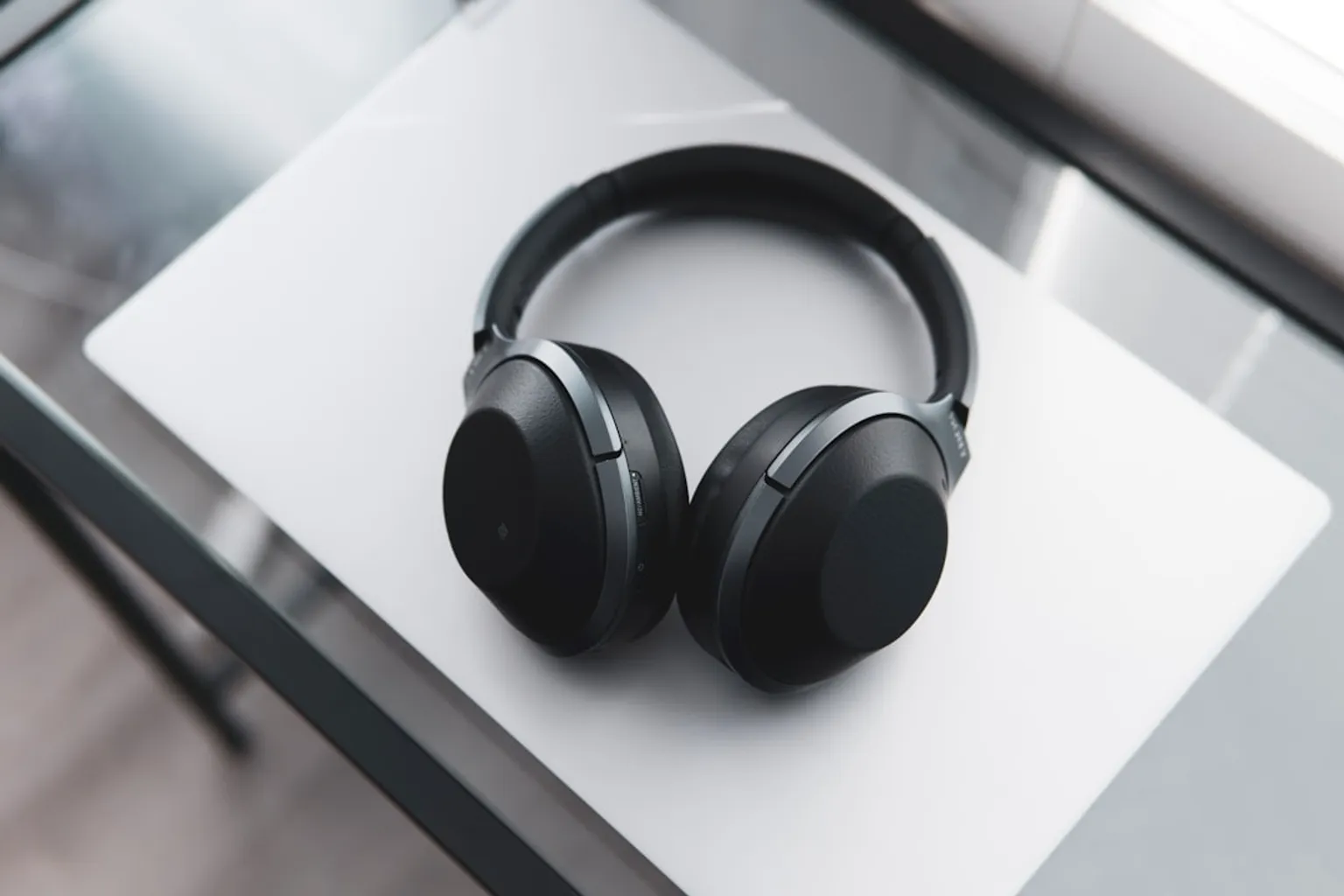
That is not a rounding error. It is a reset. Premium noise cancelling headphones are no longer flirting with $400. They are being parked at $450 and then steered higher by brands that know buyers have normalized the pain.
The trap is simple. A company adds a new processor, calls the ANC “smarter,” drops in spatial audio language, and lets the MSRP creep. Retailers then stage a sale that takes the price back to where the category used to sit. Consumers see a discount. The ledger sees a higher baseline.
The $450 baseline is now the control price
For years, $399 was the psychological line. High, but explainable. Sony, Bose, and Apple could ask for it because they owned the premium lane. You were paying for better active noise cancellation, better comfort, better microphones, and fewer compromises in daily use.
That line is gone.
The new floor is $449. Not the ceiling. The floor.
Sony set the tone with the WH-1000XM6 at $449.99. Bose followed with QuietComfort Ultra Headphones 2nd Gen at $449. Sonos Ace entered the market in June 2024 at $449. Dyson went harder with OnTrac at $529 in August 2024. Apple’s AirPods Max 2 sits at $549.
This is not random price scatter. It is market anchoring. Once enough credible brands occupy the same band, the consumer stops treating it as inflated. The number becomes ordinary. That is how MSRP inflation works in consumer tech. Slowly, then all at once.
| Model | Launch timing | Launch / starting price | What the price says |
|---|---|---|---|
| Sony WH-1000XM6 | May 2025 | $449.99 | The old flagship price moved up by $50 |
| Bose QuietComfort Ultra 2nd Gen | October 2025 | $449 | Bose accepted the new Sony-level baseline |
| Sonos Ace | June 2024 | $449 | A new entrant did not undercut the incumbents |
| Dyson OnTrac | August 2024 | $529 | Industrial design became a price lever |
| Apple AirPods Max 2 | Current generation | $549 | Apple stayed in the luxury audio bracket |
The Sonos Ace is the useful tell. New entrants usually buy attention with lower pricing. Sonos did not. It launched directly at $449. That says the category had room for a higher price floor before the consumer revolt arrived.
Dyson is even cleaner as a signal. At $529, OnTrac is not competing on conservative audio value. It is selling materials, brand theater, and design confidence. It tells the rest of the category that $500 is no longer absurd.
The sale price is not the story. The MSRP is. That is where the market tells you what it thinks you will tolerate.
This is why “why are flagship headphones so expensive” is the wrong question if it stays emotional. The sharper question is whether the extra $50 to $150 buys more utility or only preserves margin against higher input costs. The answer is mixed. Convenient for manufacturers. Annoying for you.
Tariffs turned the bill of materials into a moving target
Tariffs do not make good marketing copy. They do make good excuses. In 2025 and 2026, new US duties under Section 122 and Section 301 created effective tariff rates of roughly 35% to 40% on electronics imported from China. That pressure hits wireless headphones in the parts that matter: lithium-ion batteries, processors, wireless modules, and other electronics.
Brands do not need to manufacture every finished headset in China for tariffs to matter. Components move through supply chains. Suppliers reprice. Contracts get renegotiated. Logistics teams push production toward Vietnam, Mexico, or other locations where possible. None of that happens for free. The cost shows up somewhere.
Usually in your cart.
The important part: tariffs are not the full story. They are also not imaginary. Anyone claiming every price increase is pure corporate greed is selling a lazy argument. Anyone claiming tariffs forced every dollar of the increase is selling corporate spin. The truth sits in the ugly middle.
A 35% to 40% effective duty rate is large enough to change launch pricing. It gives finance departments a clean justification to raise MSRP, especially on products with long development cycles and heavy component dependency. But exact margin data from Sony, Bose, Apple, and the rest is not public. So no serious analyst should pretend to know the precise split between cost pass-through and opportunistic markup.
That distinction matters when you shop. If the price rise is mostly tariff shock, discounts may stay shallow. If it is mostly margin expansion, deeper promotions will come once demand softens. You do not need a political view. You need a price history.
The practical read:
1. Launch prices are becoming less generous. Brands are padding risk into MSRP before the first unit hits retail.
2. Discount windows may widen later in the cycle. If demand misses internal forecasts, the retailer eats less margin only after launch hype cools.
3. Older models become more important. A previous-generation flagship at $279 to $329 can be a better asset than a new one at $449 with marginal ANC gains.
4. Regional pricing will get messier. Supply chain shifts do not land evenly across markets.
Tariff pressure is also time-sensitive. Certain measures have effective and expiration dates. Replacement rules can appear. Trade agreements can change. That uncertainty is part of the premium now. You are not just paying for headphones. You are paying for a brand’s hedge against the next landed-cost surprise.
It is the same risk-pricing logic that appears in markets far outside audio, including speculative digital sectors like Web3 gaming economies, where pricing often reflects not only current utility but also expected volatility. Different product. Same unpleasant math.
Raw materials are not flat, and headphone makers know it
Production costs for headphones have risen about 18% since 2021 due to volatility in raw materials, including rare earth metals and lithium-ion batteries. That number deserves more respect than it usually gets.
A premium wireless headset is not just plastic earcups and a logo. It is a battery-powered computer with microphones, drivers, wireless radios, accelerometers in some models, processors, memory, ports, hinges, headband materials, cushions, and firmware support. The bill of materials is exposed to several markets at once.
Lithium matters because wireless headphones are judged on runtime. Buyers punish weak battery life. Reviewers punish it harder. Brands cannot casually shrink the pack unless they offset it with power efficiency. That means newer chips, tighter power management, and more engineering cost.
Rare earth materials matter because drivers, magnets, and compact acoustic systems depend on stable supply and consistent quality. You can cheap out here. Many brands do. Then the product sounds thin, distorts under load, or loses control in bass-heavy tracks.
This is where expensive noise cancelling headphones value gets complicated. A higher price can be defensible if the money goes into:
- lower cabin-pressure ANC without the “eardrum suck” effect;
- better microphone arrays for calls in street noise;
- stronger hinges that do not creak after six months;
- replaceable ear pads that do not cost a small tax payment;
- firmware updates that fix bugs instead of creating new ones;
- stable multipoint Bluetooth switching;
- lower latency for video and gaming use;
- codec support that matches the ecosystem you actually use.
But that is the charitable version. The less charitable version is that material inflation gives brands cover to reprice the entire stack. The battery costs more, so the “premium experience” costs more. The hinge is slightly nicer, so the MSRP gains $50. The app gets a new splash screen, and now you are told the platform has evolved.
No. That is not value. That is packaging.
The best way to audit this is depreciation. Premium wireless headphones are not heirloom audio gear. Batteries age. Pads wear. ANC algorithms get surpassed. Bluetooth standards move on. A $449 headset used for four years costs about $112.50 per year before replacement pads or warranty risk. A $329 previous-gen model used for the same period costs about $82.25 per year. That $30 annual gap needs to buy something you will feel every week.
If it does not, do not pay it.
ANC became table stakes, so brands had to invent a new premium layer
Active noise cancellation used to justify the premium by itself. Not anymore. As of 2026, more than 65% of premium headphones feature ANC. In the high-end segment, ANC is expected. No one gets applause for including brakes on a car.
That creates a problem for manufacturers. Once the headline feature becomes standard, they need another way to protect pricing. Enter proprietary ANC processors, adaptive transparency modes, spatial audio, head tracking, AI call processing, custom tuning engines, and ecosystem lock-in.
Some of this is real. Some of it is a scented candle in a balance sheet.
Modern ANC is hard. The best systems sample outside noise, process it in real time, compensate for fit variation, and avoid making music sound dead. A good transparency mode is even harder. It has to pass the outside world into your ears without hiss, lag, or harshness. Call quality needs beamforming microphones, noise rejection, and DSP that can separate your voice from traffic and wind.
That work costs money. Silicon costs money. Engineers cost money. Testing across head shapes, glasses, hair, hats, and cabin noise costs money.
Spatial audio is a more uneven line item. For movies and certain platforms, it can be convincing. For music, it varies. Head tracking can feel clever for ten minutes and irrelevant after that. If a brand uses spatial audio to justify a higher MSRP while leaving codec support thin or app controls half-baked, treat the premium as suspect.
Here is the clean split.
| Feature | Worth paying extra for? | Auditor’s note |
|---|---|---|
| Stronger ANC across low-frequency rumble | Yes | Useful on flights, trains, HVAC-heavy offices |
| Better transparency mode | Yes | Daily value if you commute or work in shared spaces |
| Improved call microphones | Yes | Only if tested in real noise, not a quiet room |
| Spatial audio with head tracking | Sometimes | Ecosystem-dependent and often overvalued |
| Proprietary processor branding | Not by itself | Ask what it improves, not what it is called |
| Premium materials | Sometimes | Valuable if they improve durability and comfort |
| App redesign | Rarely | Software polish is not a $50 feature |
| Exclusive colorways | No | That is retail bait |
High end ANC headphones cost more because the technical stack is thicker. Fair. But you should not pay for every layer equally. ANC and comfort create daily value. Spatial audio is conditional. Color and lifestyle branding depreciate immediately.
If a feature does not improve your commute, your calls, your concentration, or your comfort, it is not a feature. It is margin decoration.
This is where Apple has a different equation. AirPods Max 2 at $549 is not just a headphone price. It is an ecosystem price. If you live inside Apple devices, the switching, spatial audio integration, and system-level polish can carry weight. If you do not, that premium decays fast. The resale story may be stronger, but the cash outlay is still real.
Sony and Bose are more direct. Their value case lives or dies on ANC, comfort, battery life, app stability, and street price. Not mystique.
The $500 to $1,000 segment is not a niche anymore
The premium headphones market is moving upward. The $500 to $1,000 segment is projected to lead premium market share in 2026, driven by buyers with higher disposable income seeking flagship features, refined sound, and premium build quality.
Translation: manufacturers have discovered enough people will pay luxury-adjacent prices for wireless audio. So they will keep testing the ceiling.
This does not mean every buyer is irrational. Noise cancelling headphones are productivity tools now. They are office walls for remote workers, sleep aids for travelers, and call equipment for people who live in meetings. If a pair gets used three hours a day, five days a week, the annual cost can be defensible.
Run the ownership math instead of the discount math.
A $449 headset used 250 days per year for three years costs about 60 cents per use day. Four years drops it to about 45 cents. That sounds reasonable. Until you compare it to a $299 previous-gen model that gets you 90% of the performance. That one costs about 40 cents per use day over three years, and about 30 cents over four.
The delta is not huge in daily terms. That is how premium pricing survives. Brands turn a painful upfront increase into pennies per day. Retail finance loves that framing. It softens resistance.
Your job is to reverse it. Ask what the extra $150 buys in actual use:
- Does the new model cancel voices better, or only airplane rumble?
- Are the ear pads cooler after two hours?
- Is the headband less clampy?
- Does multipoint switching stop fighting your laptop?
- Are microphones usable near traffic?
- Does the case protect the headphones, or is it a fabric envelope with delusions?
- Can you replace pads without paying absurd accessory pricing?
- Does the app work without harvesting your patience?
If the answer is mostly no, the flagship premium is dead weight.
The premium wireless headphones price trend also changes how you should read sales. A 20% discount on a $549 product is not automatically attractive. That leaves you around $439. That used to be a full launch price for the best consumer ANC models. Now it is framed as relief.
Retailers know this. They inflate the emotional value of the discount while the brand preserves the higher reference point. The consumer sees “$110 off.” The market sees “still above the old baseline.”
That is not a deal. That is a controlled descent.
How to buy without funding the markup
The cleanest buying strategy is boring. Good. Boring saves money.
Do not buy premium noise cancelling headphones at launch unless one of three conditions is true: your current pair failed, the new model fixes a specific problem you personally have, or you can expense the purchase. Otherwise, launch week is the worst week. The price is pure MSRP. Reviews are still settling. Firmware is young. Retailers have no reason to compete.
The first useful window usually appears after early demand clears and retailers start attaching gift cards or modest direct discounts. The better window comes when the model is no longer fresh but not yet discontinued. That is where depreciation works for you.
Previous-generation flagships deserve special attention. The Sony WH-1000XM5 did not become bad because the XM6 arrived. Bose’s older QuietComfort Ultra did not become obsolete because the second generation exists. Audio improvements are incremental at this level. ANC can improve. Comfort can shift. Microphones can get better. But the prior model often remains the value center once it drops far below MSRP.
A disciplined buying line looks like this:
1. At full MSRP: Buy only for urgent replacement or a must-have feature. No applause for paying retail.
2. At 10% off: Still early. Acceptable only if stock is tight and reviews confirm a major improvement.
3. At 20% off: Start comparing against previous-gen clearance. This is where the spreadsheet wakes up.
4. At 30% off or more: Serious territory, assuming the model has no known hinge, battery, or firmware issue.
5. Previous-gen at 35% to 45% below original MSRP: Often the best cost-per-year play.
The dangerous middle is a small launch discount wrapped in heavy marketing. “Limited time” means little if the model has just entered its retail life. Premium headphones do not vanish after one weekend. They depreciate. Let them.
Also watch accessory costs. Ear pads are consumables. If replacements are expensive or hard to find, ownership cost rises. A headset with better pad availability can beat a slightly newer rival over four years. Batteries are harder. Most premium wireless headphones are not designed for easy user battery replacement. That is planned depreciation by design, whether the brand says it or not.
Software matters too. A great headphone can become irritating through app bloat, forced account systems, unstable Bluetooth behavior, or firmware that changes the sound profile. Read long-term user reports, not only launch reviews. Launch reviews catch performance. Owners catch decay.
The strict buy-wait calendar
Here is the hard line.
If you need premium ANC now, set your ceiling at roughly $350 for a previous-generation flagship or $400 for a current model with verified improvements in ANC, comfort, or microphones. Above that, you are paying early-adopter tax unless your use case is heavy and specific.
At $449, be skeptical. That is the new baseline, not proof of superior value.
At $529 and up, demand daily-use justification. Dyson-level pricing needs more than design confidence. Apple-level pricing needs ecosystem value. If you cannot name the reason in one sentence, wait.
The price trend is not reversing quickly. Tariffs, raw material volatility, and feature escalation all support higher MSRPs. Corporate pricing departments will not voluntarily retreat from a higher floor if consumers keep paying it. The only counterweight is delayed demand.
So use delay.
Buy during mature-cycle discounts. Buy previous-gen when the new model creates inventory pressure. Avoid launch MSRP unless the utility is immediate and measurable. And stop treating every markdown from an inflated sticker as savings.
Click buy when the price reflects depreciation. Wait when it reflects theater.